The post Calculated metrics appeared first on Piwik PRO.
]]>It is a valuable solution if you miss this one-of-a-kind metric that is typical only for your business. For example, if you want to know the percentage of people that don’t bounce – no-bounces – you’ll have to create this metric yourself. Calculated metrics allow you to get more insight into what happens during each stage of a user’s life cycle.
Here are some examples of calculated metrics:
Pages per visitor: Similar to the default metric: Page views in a session. It shows you the average number of pages a visitor viewed on your site.
Name: Pages / visitors
Formatting: Number
Formula: {page_views} / {visitors}
Visitor e-commerce conversion rate: Focuses on e-commerce conversions based on visitors (not sessions).
Name: Visitor e-commerce conversion rate
Formatting: Percentage.
Formula: {ecommerce_conversions} / {visitors}
No-bounces: The opposite of the default metric: Bounces. It helps you focus on traffic that didn’t bounce after the first-page view.
Name: No-bounces
Formatting: Number
Formula: {sessions} – {bounces}
The post Calculated metrics appeared first on Piwik PRO.
]]>The post California Privacy Rights Act (CPRA) appeared first on Piwik PRO.
]]>The main changes introduced by the CPRA include:
- Establishing a new government agency for state-wide data privacy enforcement, the California Privacy Protection Agency (CPPA).
- Creating a category of sensitive personal information (SPI), which is regulated separately and requires stronger security measures than personal information. SPI includes Social Security Number, driver’s license, financial account information and login credentials, precise geolocation data, biometric or health information, etc.
- Changing the definition of companies that are subject to the regulation – excluding smaller businesses and including bigger ones.
- Modifying existing rights and adding four new ones: the rights to correction, opting out of automated decision-making, knowing about automated decision-making, and limiting the use of sensitive personal information.
- Regulating cross-context behavioral advertising from which users can opt out and ask businesses to stop sharing and selling their personal information with third parties to avoid being targeted with ads based on behavioral data.
- Adding GDPR-like requirements of data minimization, purpose limitation, and storage limitation.
- Making a business responsible for how third parties use, share or sell personal information that the business collected in the first place.
For more information on the CPRA, CCPA, and other laws in the US, check out our blog content:
- CCPA & CPRA regulations: How marketers can comply with the Californian laws
- Data privacy laws in the United States and how they affect your business [UPDATED]
The post California Privacy Rights Act (CPRA) appeared first on Piwik PRO.
]]>The post Call to action (CTA) appeared first on Piwik PRO.
]]>This action can be, for example:
- Purchase
- Download
- Registration for a newsletter within a marketing campaign
In most cases CTA is represented by a distinctive button. CTA should be visible, clear and promising. CTAs should be a vital part of A/B testing .
More about the call-to-actions on the Piwik PRO blog:
The post Call to action (CTA) appeared first on Piwik PRO.
]]>The post Campaign tracking appeared first on Piwik PRO.
]]>Monitoring your campaigns also gives valuable information about user engagement and opportunities to improve it.
Analyze the recorded data and learn:
- Where do users come from?
- How many clicks does an advertisement banner receive?
- How do visitors behave on your site?
What’s more, campaign tracking helps you with conversion attribution, that is, assigning credit for conversions in a customer journey that spans more than one channel.
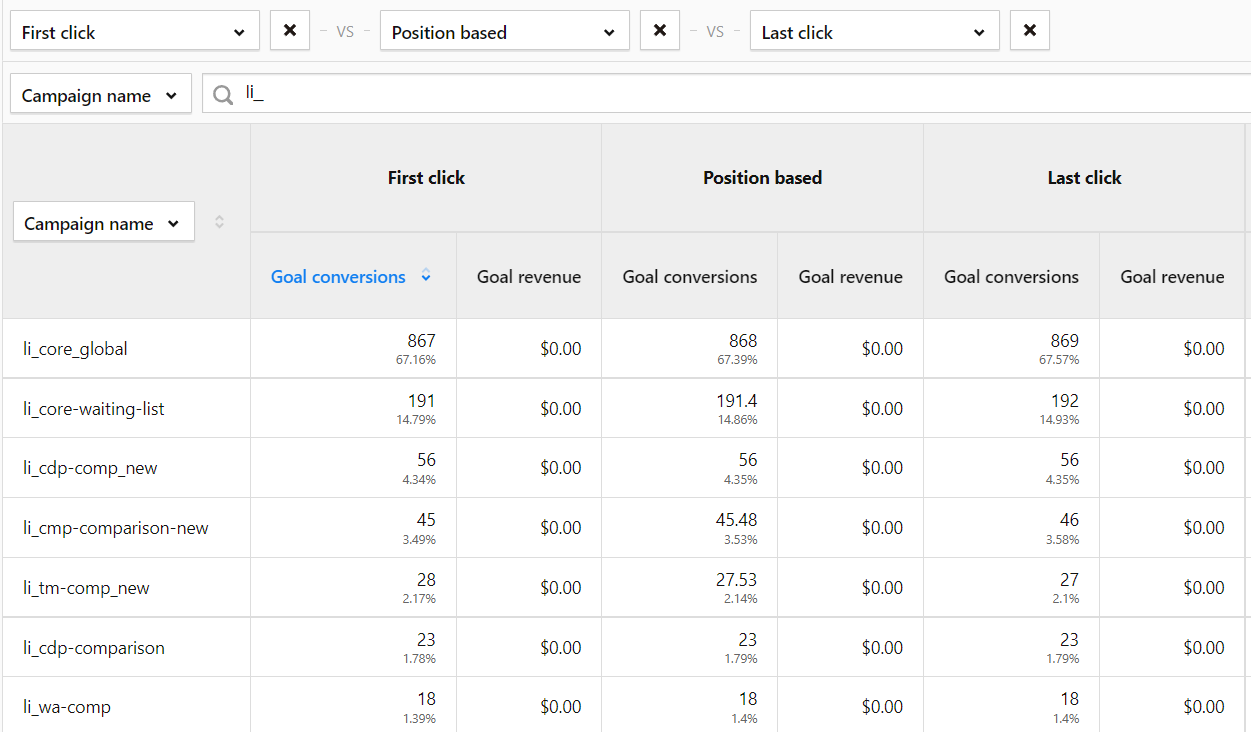
Campaign tracking requires tagging the links you use in campaigns. Tagging means adding special parameters to URLs so your analytics software can recognize a particular campaign and assess exactly how your ad or marketing initiatives are performing.
Tagged URLs contain information about source, medium, keywords and the campaign name.
An example of a tagged URL using PK parameters (used only in Piwik PRO):
https://www.example.com/?pk_source=google&pk_medium=cpc&pk_campaign=Winter2019
An example of a tagged URL using UTM parameters (used in multiple analytics and marketing platforms, also in Piwik PRO):
https://www.example.com/?utm_source=google&utm_medium=cpc&utm_campaign=Winter2019
In both examples, we can extract the following information:
- Traffic comes from paid results in Google search engine: google / cpc
- With listed campaign names, such as Winter2019, we know exactly which campaign drove traffic to our Landing page .
More about campaign tracking on the Piwik PRO blog:
- A complete guide to campaign tracking in your web analytics platform
- How multi-channel attribution works in Piwik PRO
To get more technical perspective on campaign tracking, visit our help center: Campaign report
Feel free to use our own tagging tool: Piwik PRO URL builder
The post Campaign tracking appeared first on Piwik PRO.
]]>The post Cart abandonment rate appeared first on Piwik PRO.
]]>It is calculated by dividing the total number of completed transactions by the total number of initiated transactions. This rate will identify what percentage of visitors add an item to the cart but don’t complete the purchase.
It is an essential metric for ecommerce sites because a high cart abandonment rate could mean a website needs a better user experience or a sales funnel needs to be fixed. Reducing this metric leads directly to increased sales and revenue, so optimizing this area is important.
The post Cart abandonment rate appeared first on Piwik PRO.
]]>The post Churn rate appeared first on Piwik PRO.
]]>The post Churn rate appeared first on Piwik PRO.
]]>The post Click analytics appeared first on Piwik PRO.
]]>Learn more:
Marketing performance analytics
The post Click analytics appeared first on Piwik PRO.
]]>The post Click path appeared first on Piwik PRO.
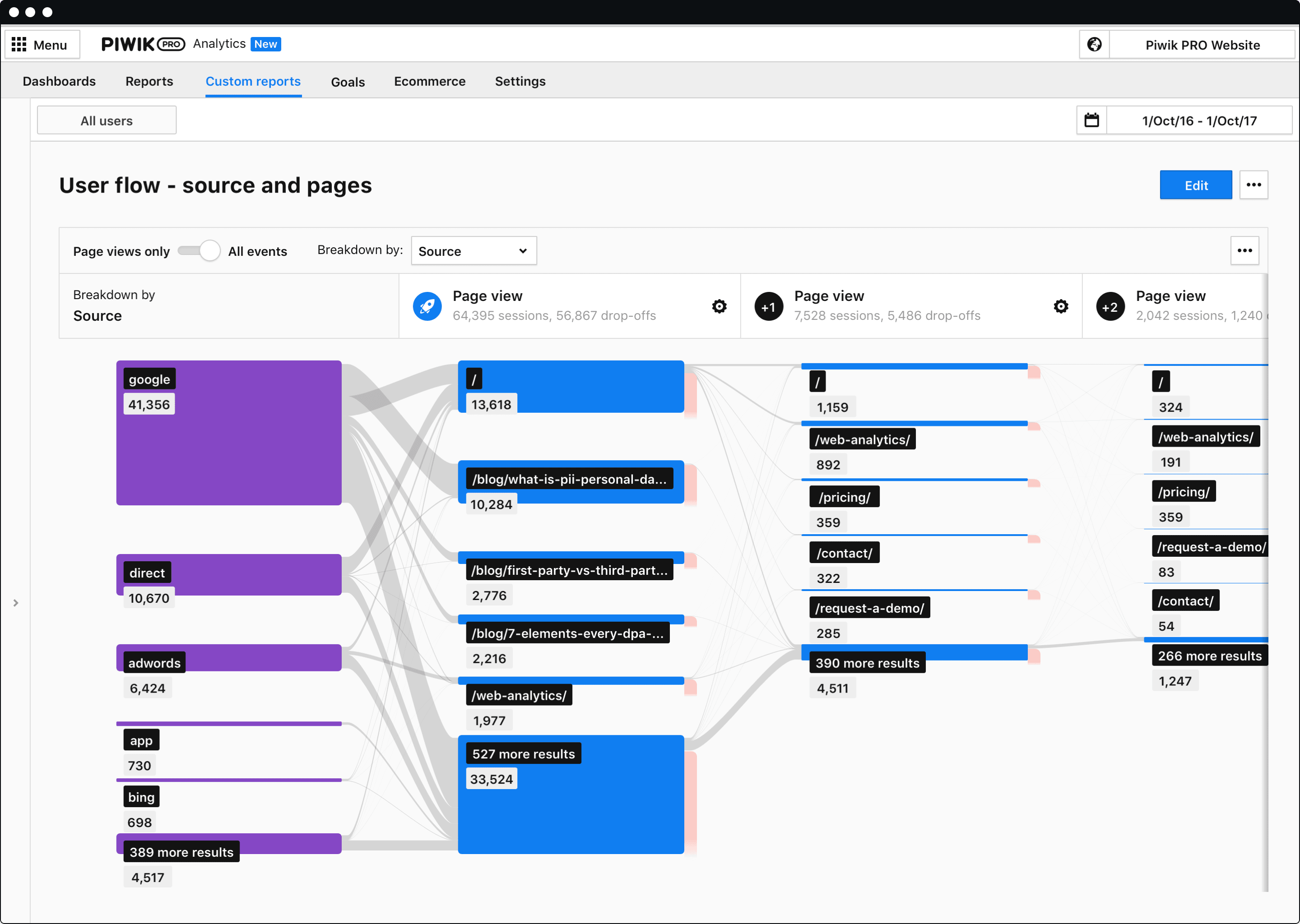
]]>Knowing what your visitors do on your website allows you to change the content, layout, and placement of your call-to-action (CTA) buttons. This will not only improve the user experience but also drive conversion.
An example of click path:
More about click path and user flow on the Piwik PRO blog:
- Data flow in an analytics platform: How to set up your data collection and analysis process
- 3 reports for optimizing user flow on your website
- 4 steps to apply product analytics to track user onboarding
For more technical aspects of the user flow, read Piwik PRO help center articles:
- Set up a user flow report
- What is strict and non-strict mode in the user flow report?
- 12 useful custom reports
The post Click path appeared first on Piwik PRO.
]]>The post Click-through rate (CTR) appeared first on Piwik PRO.
]]>For example, if an ad has been clicked on 200 times after being displayed 50,000 times, it has a click-through rate of 0.4%.
CTR measures the effectiveness of your content and marketing campaigns, such as PPC, email, or social media, in reaching your target audience. It can also help evaluate the success of different marketing channels in the business’ total performance. Moreover, CTR assesses how effective your choice of CTAs and advertising copy is.
The higher the click-through rate, the more successful the content or ad is in generating interest. If your CTR is low, you may be targeting the wrong audience, using messaging that doesn’t resonate with users, or spending money on irrelevant Keywords . There isn’t a single benchmark determining what makes a good CTR, as it will vary across industries and campaigns.
CTR alone doesn’t give you a complete overview of your company’s marketing performance, so reaching a high CTR shouldn’t be your primary goal. Always focus on business metrics first and combine CTR with other metrics, such as conversion rates.
The post Click-through rate (CTR) appeared first on Piwik PRO.
]]>The post Client-side analytics appeared first on Piwik PRO.
]]>The characteristics of client-side analytics include:
- Ease of implementation: Setting up client-side tracking is generally straightforward – it often involves adding a snippet of code to the website.
- Cookies: Client-side analytics often utilizes cookies to track users over time, allowing for a more detailed understanding of user behavior and preferences.
- Privacy compliance: As data gathered through client-side analytics often comprises personal data, its collection must comply with privacy regulations such as GDPR, including obtaining user consent.
- Data reliability issues: Data collection accuracy can be compromised due to factors like ad blockers or browser settings that limit tracking capabilities.
- Site performance: Excessive client-side tracking can slow down website performance, potentially affecting user experience.
Client-side analytics differs from server-side analytics, which involves tracking and collecting website data on a dedicated server of a website or app.
A hybrid tracking method known as server-side tracking with a first-party collector combines the benefits of server-side and client-side analytics. In this approach, cookies are set on the client side, and the tracking requests come directly to a first-party domain instead of a third-party analytics platform.
Learn more:
- Server-side tracking vs. client-side tracking
- Server-side tracking and server-side tagging: The complete guide
The post Client-side analytics appeared first on Piwik PRO.
]]>